Shack-Hartmann Wavefront Sensor Buying Guide: How to Choose
Shack-Hartmann wavefront sensor buying guide: pitch, dynamic range, wavelength, software and cost, explained from our hands-on lab experience.
8 min read
Lenslet pitch, dynamic range, wavelength, and software: these four checks should come first when you choose a Shack-Hartmann wavefront sensor. Settle them, and most other questions get easier.
What to look for first in a Shack-Hartmann sensor
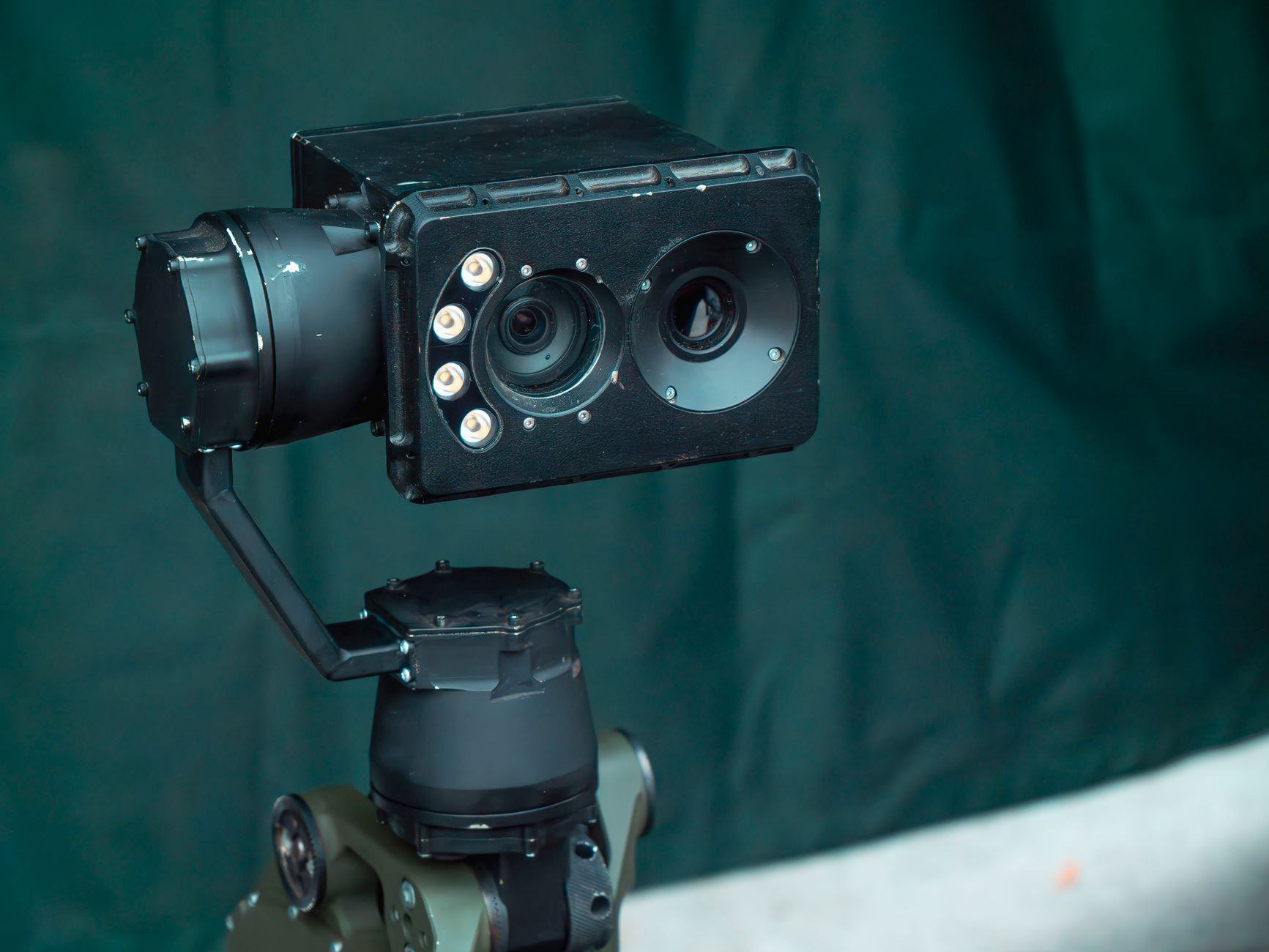
A Shack-Hartmann sensor is a grid of small lenses, called a lenslet array, placed in front of a camera. Each lenslet focuses a patch of the beam onto its own spot. When the wavefront is flat, the spots sit in regular rows. When it is distorted, the spots shift, and the shift tells you how the light has been bent. That is why the lenslet grid is the first thing to examine.
Start with lenslet pitch, which has to suit your beam diameter and the spatial detail you need to resolve. Next comes the trade-off between dynamic range and sensitivity. Then check the working wavelength, which should match both your source and the detector’s quantum efficiency. Last is the software. If it cannot export Zernike coefficients and raw spot positions, you will rebuild much of the analysis yourself.
Why buyers end up with the wrong sensor
Most regrets come from a few common mistakes. The most frequent is buying on camera resolution alone. A high-resolution camera behind a coarse lenslet array gives many pixels but few sampling points across the pupil, so fine wavefront structure stays hidden. The lenslet array decides how much of the beam you actually sample.
Another trap is assuming a sensor built for a collimated beam will also cope with a strongly aberrated or converging one. Once the spots move far enough, they can cross into their neighbours, and reconstruction breaks down. One customer spent several weeks chasing what looked like an alignment fault. The real cause was dynamic range from the start, and changing the lenslet focal length fixed it in an afternoon.
Buyers also forget the reference. A Shack-Hartmann sensor measures slopes relative to something, so without a calibrated flat or a known reference source you only get relative numbers. If you need absolute figures, plan for that reference setup from the beginning, not after the sensor arrives.
Lenslet pitch and the spatial resolution it sets

Pitch is the centre-to-centre distance between neighbouring lenslets. A smaller pitch resolves finer wavefront detail, but each subaperture gathers less light, which hurts spot centroiding in dim conditions. Commercial pitches usually fall between 100 and 300 micrometres, and the right value depends on your beam.
What matters in practice is how many subapertures fit across the pupil, since that limits the highest Zernike order you can fit reliably. A 10 mm beam with a 150 micrometre pitch gives roughly 67 subapertures across the aperture. That is enough for low-order aberrations such as defocus and astigmatism, and for many coma and spherical terms. Reduce the beam to 3 mm with the same pitch and you get about 20 subapertures. At that point the higher-order terms begin to blur together, and the residuals show it first.
Dynamic range versus sensitivity

Dynamic range is the largest wavefront slope a spot can move before it crosses into a neighbouring cell. Sensitivity describes how precisely the centre of each spot can be located in the presence of noise. Improving one usually costs the other, and any vendor who claims otherwise is ignoring the physics.
The main lever is the lenslet focal length. Longer focal lengths push spots further for a given slope, which raises sensitivity but leaves less room, lowering dynamic range. Shorter focal lengths reverse that. Lab alignment work, where the wavefront is already close to flat, favours sensitivity. Strong turbulence or fast-changing aberrations favour range. Decide which regime your work falls into before reading the spec sheet, because the answer determines which sensor suits you.
Choosing wavelength and detector

Silicon detectors cover roughly 400 to 1000 nm and suit most visible and near-infrared testing. If your work extends to 1.0 to 1.7 micrometres, you will need InGaAs or a similar detector, and the price rises quickly. Match the band to the source you actually run, not the one highlighted on the brochure.
Check the lenslet array as well. Some arrays transmit poorly outside their design band. A sensor that reads cleanly at 633 nm can produce noisy spots at 1064 nm if the optics were not designed for that wavelength. Ask the vendor for the transmission curve, not only the wavelength range printed on the box.
Software, data export and integration

Good software performs real-time centroiding and wavefront reconstruction, and it documents the reconstruction method so you can verify the calculations. Confirm the export formats for slopes, spot positions and Zernike coefficients. If you plan to feed the data into your own analysis or control loop, check whether an SDK or API is available. Also ask how the vendor handles reference calibration and drift. A sensor that slowly wanders over a few hours can mislead you long before you notice.
When Shack-Hartmann beats interferometry, and when it does not
Interferometry measures phase directly and is difficult to beat on smooth, well-aligned surfaces. It does require a demanding setup, with stable mounts, low vibration and adequate coherence. Shack-Hartmann measures local slopes and reconstructs the wavefront from them, which makes it far more tolerant of vibration and partial coherence. It handles rough or fast-changing optics well, so on a noisy floor with a rough beam it often gives the usable answer.
Many labs end up using both. Interferometry suits final verification, where the last few nanometres matter. Shack-Hartmann suits in-process alignment, where speed matters more than that final increment of accuracy.
What a sensor really costs
Entry-level lenslet-based sensors often start in the low thousands of US dollars. Research-grade systems with larger, higher-resolution arrays cost considerably more. The sticker price is only part of the picture. Budget for a reference source, mounting hardware and the calibration hours you will spend, since these can account for a surprising share of the first year. When comparing quotes, make sure the specifications match: pitch, subaperture count, wavelength range and frame rate.
Reading the results: what a good measurement looks like
A good measurement is unremarkable. The reconstructed wavefront should hold steady across repeated frames before you trust any single Zernike term. Erratic numbers usually indicate noise, drift or a spot leaving its cell. Use a known flat or reference to confirm the zero point, and recheck it whenever the setup changes, even slightly.
Reading Zernike terms takes practice. Our piece on interpreting wavefront maps and Zernike polynomials in practice walks through the process with examples from the bench. If you are still building your bench, our notes on vibration isolation and lab setup explain why a stable floor matters as much as the sensor itself.
For further background, the editorial team at monamail.vn has published reading on structured information handling that many lab teams find useful when organising measurement records.
Frequently asked questions
What lenslet pitch should I start with for a 5 mm beam?
A pitch in the 100 to 150 micrometre range is a reasonable starting point for a 5 mm beam. That gives roughly 30 to 50 subapertures across the pupil, enough for the low-order terms most alignment work depends on. Adjust once you see how noisy the spots look under your actual conditions, since the bench often tells you more than any calculation.
Can a Shack-Hartmann sensor replace an interferometer?
Sometimes, but not always. For in-process alignment and rough or vibrating environments it often works well. For final acceptance of smooth, high-quality optics, an interferometer usually remains the better tool, so plan for both if your accuracy budget is tight.
Which wavelength range is best for adaptive optics testing?
It depends on the source and the application. Visible and near-infrared work with silicon detectors covers a lot of adaptive optics testing. If your system operates further into the infrared, you will need a detector and lenslet array designed for that band, so check the spectral specifications carefully before committing.
How often should the sensor be recalibrated?
Recalibrate whenever the setup changes, and otherwise on a schedule your work justifies. Temperature swings, knocks to the mount and long warm-up drift can all shift the zero point. Check it against a known reference often enough that you would catch a problem before it affects a result.
Is it worth paying more for a larger dynamic range?
Only if your aberrations are genuinely large. If you mostly work with near-flat wavefronts from well-aligned optics, the extra range adds little and usually costs sensitivity. If you expect strong turbulence or large misalignments, that extra range can prevent unusable data, and in those cases the premium is usually justified.